
- LG Energy Solution holds 2025 China Power Battery Youth Innovation Forum to discuss future battery technology and talent development.
- By strengthening collaboration across industry, academia, and research, the company reaffirms its commitment to building a sustainable battery talent pipeline.
On December 6, 2025, LG Energy Solution’s Nanjing facility hosted the 2025 China Power Battery Youth Innovation Forum, inviting young innovators and industry stakeholders to explore the future of battery technology.
Co-organized with the China Education Support Programme and guided by the China Industrial Association of Power Sources (CIAPS) and China ITS Industry Alliance (C-ITS), the forum gathered professionals from all sides. Attendees included government officials, industry leaders, academic experts, students, and corporate representatives, who discussed everything from battery technology to evolving industry policies and development trends.
Launched in 2018, this initiative has now run for seven consecutive years, establishing itself as one of LG Energy Solution’s signature annual programs. It reflects the company’s long-term commitment to social responsibility and cultivating a local innovation ecosystem. This year, the program upgraded to a dual-track format, integrating the Youth Co-Creation Camp to facilitate deeper, multi-layered engagement among leading battery technology experts, scholars, and industry leaders.
Beyond fostering innovation and nurturing young talent, the forum actively strengthened collaboration by establishing an integrated platform that connects government, industry, academia, and research institutions.
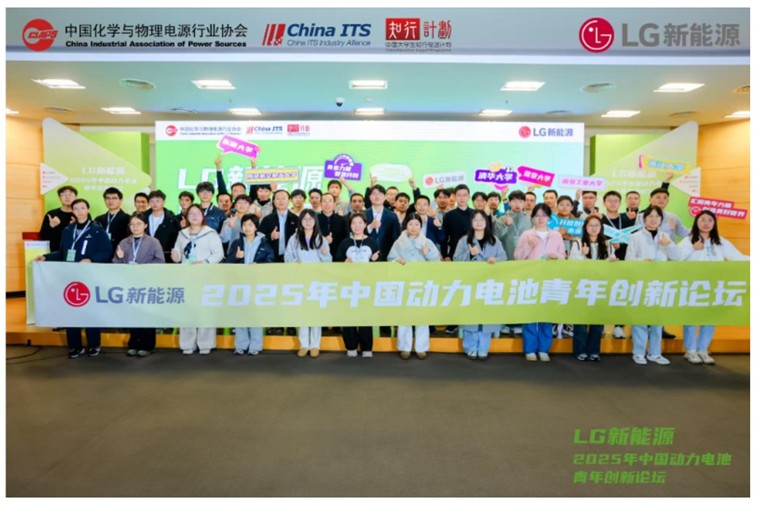
at LG Energy Solution’s Nanjing facility
Throughout the forum, industry leaders, scholars, and technical experts alike shared their unique insight into China’s battery sector, paying close attention to the direction of next-generation technologies.
Liu Yanlong, former Secretary-General of CIAPS, provided a comprehensive outlook on China’s lithium-ion battery industry for 2025. Liu noted that China has developed a highly competitive and complete industrial chain, driven by growing global demand, but that the sector is now transitioning to a stage of maturity and consolidation. As competition intensifies, sustained innovation and efficiency improvements will be critical for competitiveness.
Outlining the technology roadmap, Liu highlighted solid-state batteries as a key R&D focus. He also anticipates sodium-ion batteries will achieve breakthroughs in specific applications. On a strategic level, he discussed how Chinese companies were accelerating their global strategies, with Southeast Asia emerging as a major destination.
He Pingzhe, Head of the Department of Energy Science and Engineering at Nanjing University, presented an in-depth analysis of the disruptive potential of solid-state batteries. He explained that the monumental shift from conventional flammable liquid electrolytes and separators to solid electrolytes could significantly enhance both energy density and safety. It could also alleviate consumers’ EV range anxiety and promote the wider adoption of EVs.
He, however, also suggested that solid-solid interface issues remain a major barrier to large-scale commercialization. To address this, He’s research team introduced several innovative approaches during the event. These included low-pressure electrolyte systems, self-stabilizing interfaces, deformation-free material architectures, and multi-electron-transfer battery designs.
Xu Huiyong, Secretary-General of the Mobile Power Branch of CIAPS and Chairman of Shenzhen Precise Testing Technology, emphasized the urgent need to bolster safety standards. As the battery industry continues to expand rapidly, Xu called for stronger support from public technical service platforms and new certification systems that cover the full product life cycle.
He called battery safety a systematic challenge and advocated collaboration across government, industry, academia, research, and application sectors. His belief is that more advanced traceability mechanisms—such as battery passports—enable more effective oversight and fairer competition.
In closing remarks, Zhao Weiyun, Secretary General of C-ITS, described the Youth Innovation Forum as a meaningful platform for integrating industry, education, and research. She highlighted the remarkable creativity and potential demonstrated by the students, stressing the importance of such initiatives in cultivating future industry talent.
Zhao stated that as China’s new energy sector is entering a critical phase, a safer, smarter, and more environmentally aligned direction would be required to reach its full potential. She called for deeper cross-sector collaboration and closer alignment between industry, innovation, and talent.
Marking a new starting point for industry-university-research cooperation, Zhao expressed confidence that young talent will be the ones to take the industry into a new age, contributing to a dynamic innovation ecosystem.
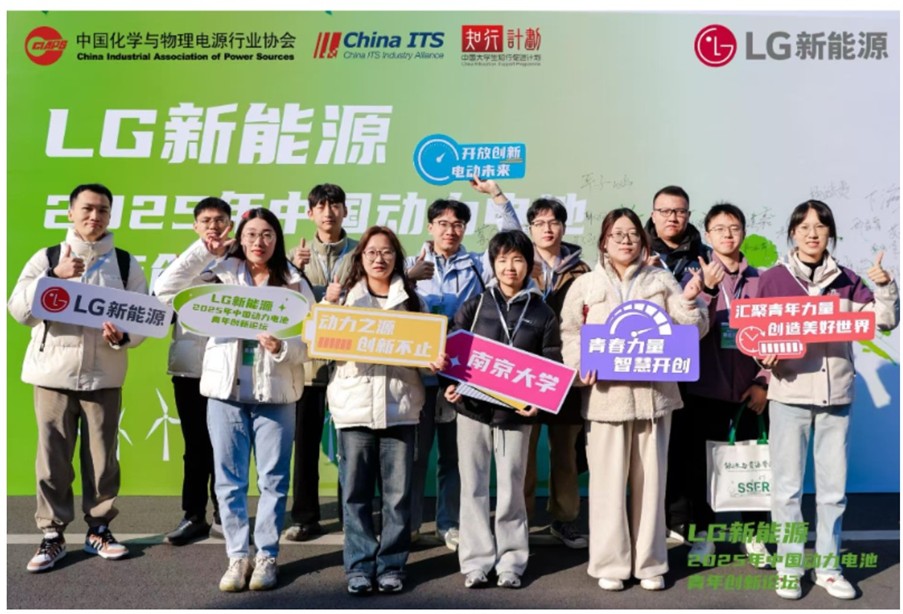
The Youth Co-Creation Camp afternoon session saw LG Energy Solution experts introduce real-world business and engineering challenges, drawn directly from industry practice. Under the guidance of design thinking mentors, 30 students from some of China’s top universities then worked in teams to develop practical solutions.
Participants later shared how the experience went beyond laboratory-centered learning, challenging them to consider real industrial constraints such as cost structures, process efficiency and reliability. This provided them with valuable hands-on exposure that clarified their understanding of industry expectations and future career paths.
“It’s a huge challenge for leaders to share cutting-edge insights while directly addressing the real needs of the industry,” said Zhang, a student representative. “Applying electrochemistry principles to concrete engineering problems offers new perspectives, and this hands-on experience has given us a clearer understanding of our future careers.”
This program has become a platform for nurturing future industry leaders, enabling teams from leading universities to tackle real-world problems. Graduates of Nanjing University’s “Power LiNK Future” team have gone on to join industry-leading companies, where they continue to drive technological progress. Meanwhile, Peking University’s “Big Manganese Awakening” team proposed innovative low-cost, high-performance lithium-ion battery cathode materials, while the team from Shanghai Jiao Tong University introduced patented solutions to address key barriers to the application of lithium-metal anodes.
Since its 2018 launch, the Youth Co-Creation Camp has educated students from more than 100 universities nationwide, with extensive support being provided from hundreds of experts and faculty members. In just 7 years, it has grown into a vital platform for collaboration among companies, industry organizations, and universities.
“We are committed to bridging the worlds of academic research and industrial practice,” said an LG Energy Solution official. “Through the Youth Co-Creation Camp, we invite young talent to tackle real industry challenges, deepening the integration of industry, academia, and research.”
He added that this collaborative model helps develop next-generation technologies while nurturing future energy sector leaders. Looking ahead, LG Energy Solution plans to advance the program in Nanjing and across the Yangtze River Delta. Its mission is to reinforce a sustainable talent pipeline that attracts young innovators to the battery sector. This, in turn, will foster a virtuous cycle in which talent and industry grow together.
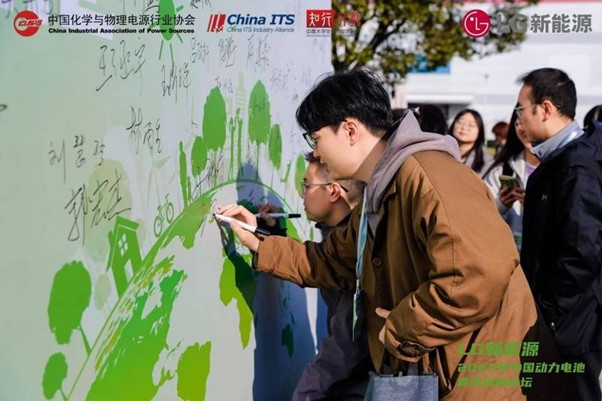
For further insights into LG Energy Solution’s Battery Innovation Contest, please refer to the following stories:
- Empowering Future Talents: LG Energy Solution Hosts 7th Battery Innovation Contest in China
- LG Energy Solution’s Battery Innovation Contest Lights the Way for Future Energy Leaders
- LG Energy Solution Hosts Innovation Contest to Discover and Nurture China’s Next Generation Battery Pioneers
+ To stay up to date with the latest news from LG Energy Solution, click “Subscribe.”