
- LG Energy Solution Wroclaw explores how energy storage supports grid stability in Europe’s energy transition.
- Joanna Lorenc explains why the parallel development of renewable generation and storage infrastructure is essential for system resilience.
As Poland continues to move toward a more sustainable energy system, the Polish ESG’s Association’s Sustainable Energy Transition Guide 2025 provides a practical framework for businesses navigating decarbonization and the development of low-carbon energy systems.

Among the contributors, Joanna Lorenc, ESG Part Leader at LG Energy Solution Wroclaw, underscores the critical role of ESS in supporting a flexible, resilient, and competitive energy landscape. In her entry, Lorenc emphasizes that the coordinated development of renewable generation and storage infrastructure is essential to grid stability as Europe accelerates its energy transition.
Lorenc notes that the EU has steadily increased the share of renewable energy in total electricity production. Eurelectric reports that renewable energy sources accounted for 48 percent of the European energy mix in 2024, surpassing fossil fuels, which fell to 28 percent[1]. Poland is moving in the same direction, gradually expanding the share of renewables in its national energy mix. Data from Forum Energii indicates that renewables accounted for 37.5 percent of total electricity production by May 2025, up from 30 percent for the full year 2024[2].
Regulations and Economic Competitiveness
Energy policy in both the EU and Poland focuses on decarbonization and the development of low-emission technologies. Key legislative acts shape the direction of change in the energy and industrial sectors, including the European Green Deal (EGD), the Fit for 55 package, the Renewable Energy Directive III (RED III), the Net-Zero Industry Act (NZIA), and the Clean Industrial Deal (CID), as well as sector-specific policies such as the Regulation on batteries and waste batteries and the Energy Performance of Buildings Directive.
As Miniszewski and Pilszyk note in the study Scenarios for the Polish Energy Mix 2040, rising energy costs, the carbon footprint of products – dependent on the energy mix of the producing country – and increasing requirements from contractors across the value chain make the development of renewable energy sources an important factor in strengthening the competitiveness of Polish industry[3].
Challenges of the Renewable Energy Sector in Poland
Despite the rapidly rising share of renewable energy sources in Poland’s domestic electricity production, variability remains a challenge. Changing weather conditions can lead to a capacity gap, meaning a difference between demand and the supply available at certain times. Surpluses generated under favorable conditions often exceed the capacity of the national power system, resulting in the forced curtailment of renewable energy production[4].
By April 2025, generation needed to be reduced by 251.3 GWh, with photovoltaics accounting for 223.4 GWh and wind power contributing 27.9 GWh. This large-scale reduction requires effective measures to address the system imbalances.
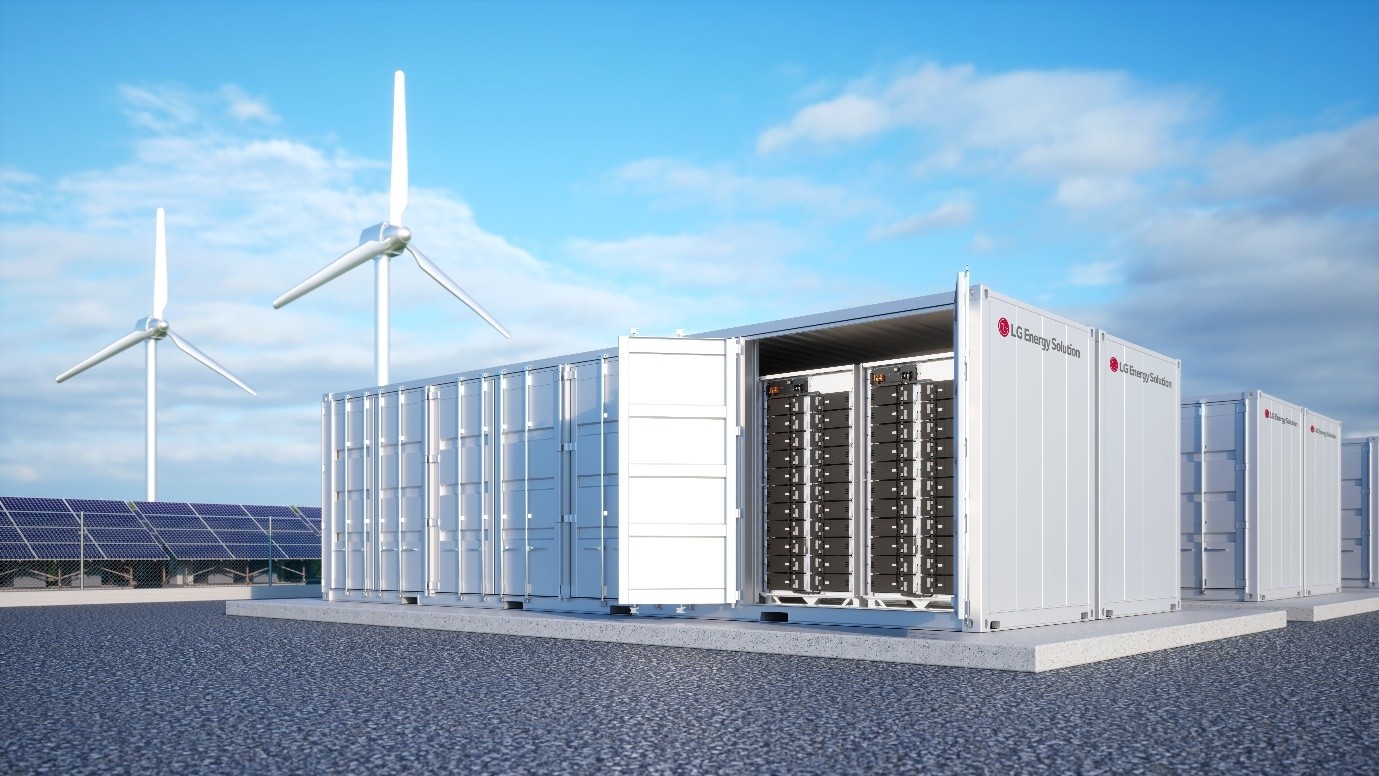
Energy Storage as a Stabilizing Element
To reduce non-market redispatch – meaning the forced curtailment of renewable energy generation – it is necessary, among other measures, to deploy energy storage systems that absorb excess electricity during high-output periods and supply it back when demand rises. This approach enhances overall system flexibility while increasing efficiency and reliability.
“At LG Energy Solution Wroclaw, we have also repeatedly addressed this topic during congresses and individual meetings, emphasizing that the parallel development of power infrastructure is of key importance, including distribution networks and energy storage facilities, which ensure system stability,” said Yong Girl Lee, Director of the External Relations Department at LG Energy Solution Wroclaw.
Strategic Investments in Energy Storage
One of the most significant projects in Poland is the Zarnowiec battery energy storage facility. Jointly developed by PGE Polska Grupa Energetyczna and LG Energy Solution Wroclaw, the initiative aims to significantly improve overall system efficiency. With a planned output capacity of 262 MW and energy storage capacity of approximately 981 MWh, the facility is set to become the largest energy storage installation in Poland and one of the largest in Europe.
According to PGE, in just two years, the system will be capable of delivering clean electricity to the grid during peak evening demand in Poland, supplying power to as many as 250,000 households. This development marks meaningful progress for the national power system.
Support Program for Energy Storage
In response to challenges in the industry, the Polish government has launched a program titled Electricity Energy Storage Facilities and Related Infrastructure for Improving the Stability of the Polish Power Grid, administered by the National Fund for Environmental Protection and Water Management (NFEP & WM).
The program targets entrepreneurs and provides financial support for the construction of energy storage facilities with a minimum power output of 2 MW and a minimum storage capacity of 4 MWh. Funding may also be used to finance grid connections and related infrastructure. A total of PLN 4.15 billion (USD 1.12 billion) has been allocated for the implementation of the project, with most dedicated to non-repayable grants.
Together, these efforts demonstrate that energy storage is not only a technical solution, but also a strategic tool for Poland’s energy transition – supporting renewable integration, enhancing energy security, and contributing to long-term economic competitiveness[5].
The original article, titled “Rola magazynów energii w transformacji energetycznej,” is featured in the Sustainable Energy Transition Guide 2025. It was contributed by Joanna Lorenc, ESG Part Leader at LG Energy Solution Wroclaw, and Aleksandra Kowal, former ESG Specialist at LG Energy Solution Wroclaw.
[1] Eurelectric, www.eurelectric.org, 2025
[2] Forum Energii Monthly, www.forumenergii.eu, 2025
[3] Miniszewski, M. and Pilszyk, M., Scenarios for the Polish Energy Mix 2040.Policy PaperNo.4.Polish Economic Institute, Warsaw, 2023
[4] Polish Photovoltaics Association, Non-market Redispatch of Photovoltaics in Poland, June 2024
[5] National Fund for Environmental Protection and Water Management, Electricity Energy Storage and Related Infrastructure for Improving the Stability of the Polish Power Grid, https://www.gov.pl/web/nfosigw/magazyny-energii-elektrycznej-i-zwiazana-z-nimi-infrastruktura, 2025
+ To stay up to date with the latest news from LG Energy Solution, click “Subscribe.”