
- LG Energy Solution’s 46-Series combines a standardized cylindrical format with multiple cell heights to support diverse EV and other electrification applications.
- The 46-Series integrates advanced battery materials, cell architecture, manufacturing technologies, and multi-layered safety engineering to improve performance, scalability, and reliability in large-format cylindrical batteries.
Why the 46-Series is Built as a Battery Platform
LG Energy Solution’s 46-Series is a next-generation cylindrical battery platform with a standardized 46 mm diameter and multiple cell heights designed for passenger electric vehicles (EVs), commercial vehicles, and emerging mobility applications. The platform combines advanced materials, cell architecture, manufacturing technologies, and a multi-layered safety architecture to improve flexibility, performance, and reliability across electrification markets.
According to the International Energy Agency (IEA), global lithium-ion battery demand in 2025 was nearly six times higher than in 2020, reflecting rapid industry growth. As battery applications diversify, manufacturers must balance energy density, power output, lifetime, safety, and packaging efficiency for varied use cases.
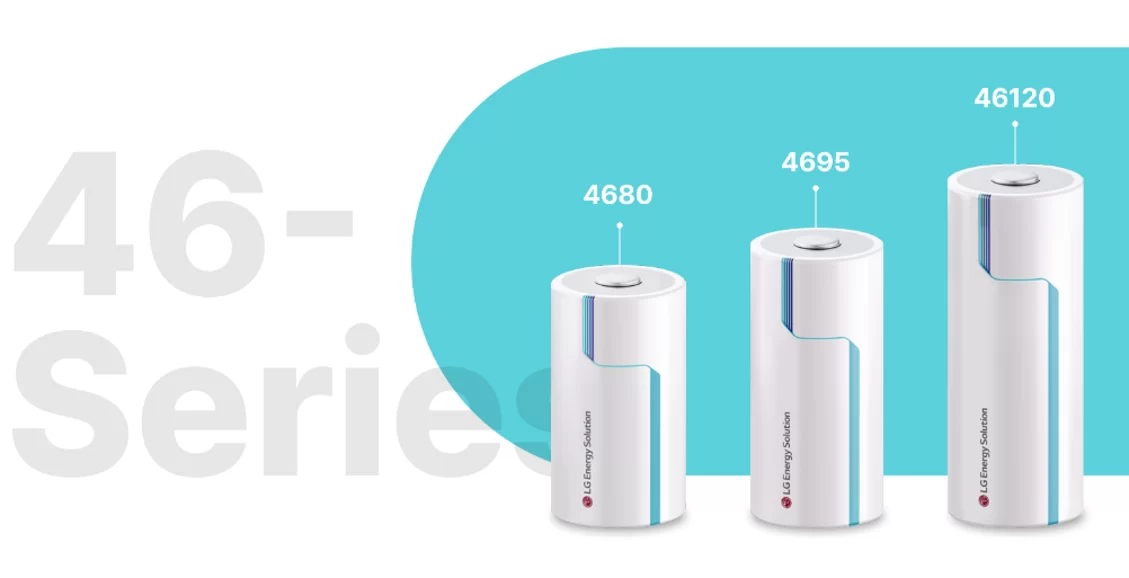
The 46-Series addresses evolving battery requirements through a standardized 46 mm cylindrical architecture available in multiple heights, including 4680, 4695, and 46120. Compared with conventional 2170 cylindrical batteries, each 46-Series cell can store more than five times as much energy. This reduces the number of cells needed per pack and improves packaging efficiency. A standardized design with flexible heights allows battery systems to be tailored to meet the requirements of passenger vehicles – such as low-profile sedans, sports cars, and high Sport Utility Vehicles (SUVs) – and commercial vehicles – such as vans and heavy-duty trucks – without sacrificing manufacturing efficiency. This standardized design enables the 46-Series to support a wide range of vehicle and performance requirements. A single battery cell can be used for multiple applications if the relevant requirements are met, helping customers save time and resources.
Key Technologies Behind the 46-Series
One of the key advantages of LG Energy Solution’s 46-Series is its high energy density. The 46-Series combines high-nickel NCMA (Nickel Cobalt Manganese Aluminum) cathodes with silicon-based anode materials to achieve high energy density. The high-nickel NCMA cathode increases energy potential, while the silicon-based anode material enhances energy storage capacity. This combination is particularly beneficial for applications with high energy-density requirements, such as long-range vehicles and Class 8 heavy-duty commercial vehicles (HDCVs), which require extended driving range on a single charge.
High-performance cylindrical batteries require not only advanced materials but also optimized cell design. As cell size increases, electrical current must travel farther, increasing electrical resistance and heat that can affect battery performance and efficiency. LG Energy Solution’s 46-Series uses Tabless architecture to minimize current paths, improving power and reducing heat during charging and discharging processes. This design supports more stable performance over the cell’s operating life.
Manufacturing is another critical factor in scaling cylindrical batteries. Because vehicle-battery manufacturing requires precise process control to ensure consistent cell quality, LG Energy Solution is developing technologies that improve production efficiency without compromising quality. Combining enhanced speed with stable quality is a key aspect of manufacturing cells to meet growing customer demand.
How LG Energy Solution Designs Battery Safety
LG Energy Solution applies a multi-layered safety architecture that integrates cell-, module-, and pack-level technologies to manage heat, structural integrity, and electrical energy flow.
Directional Venting serves as the first layer of the 46-Series’ safety strategy. If abnormal pressure builds up inside a cell, the venting structure guides the release of gas and energy to help mitigate uncontrolled heat and thermal propagation within the battery pack.
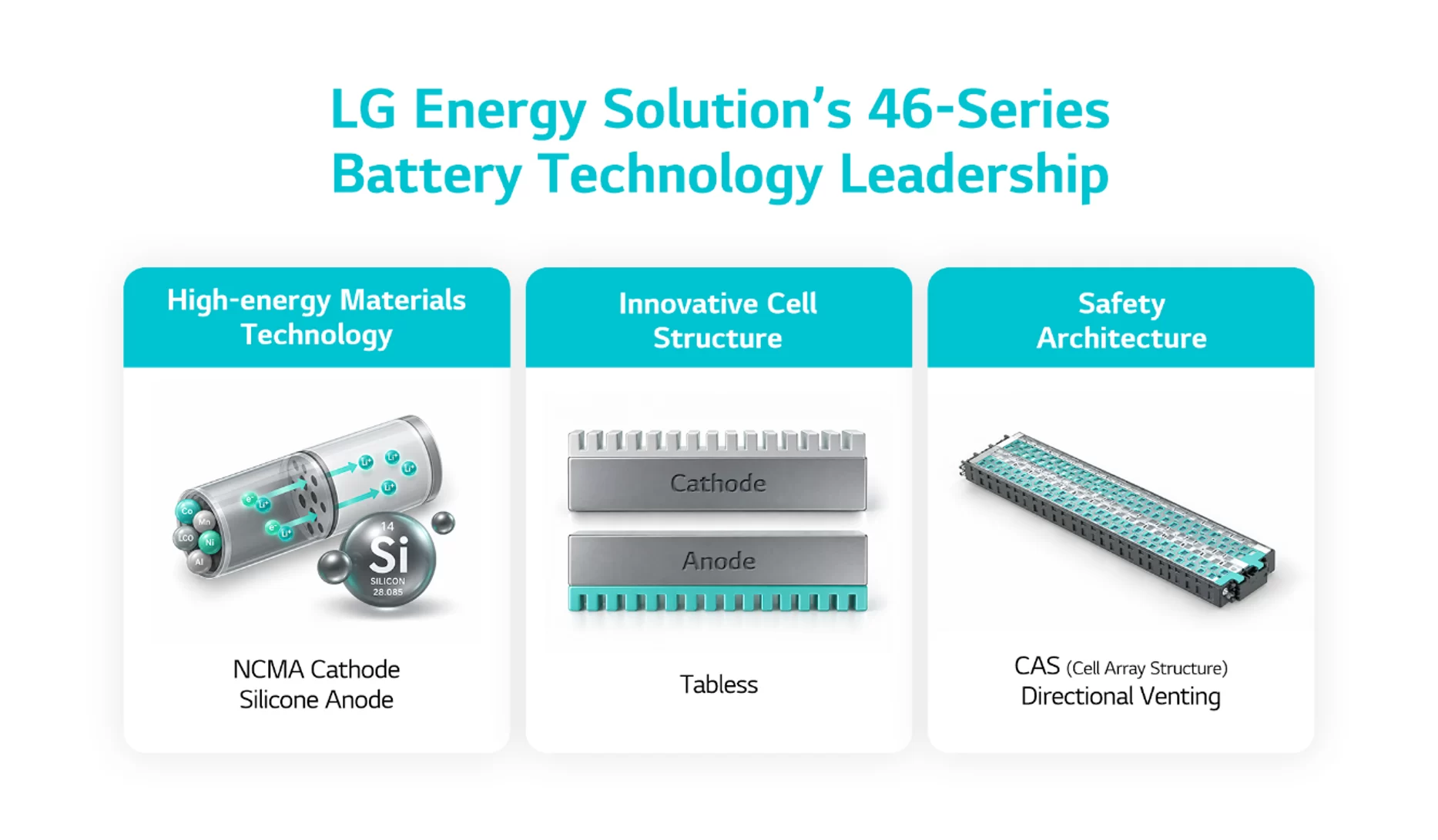
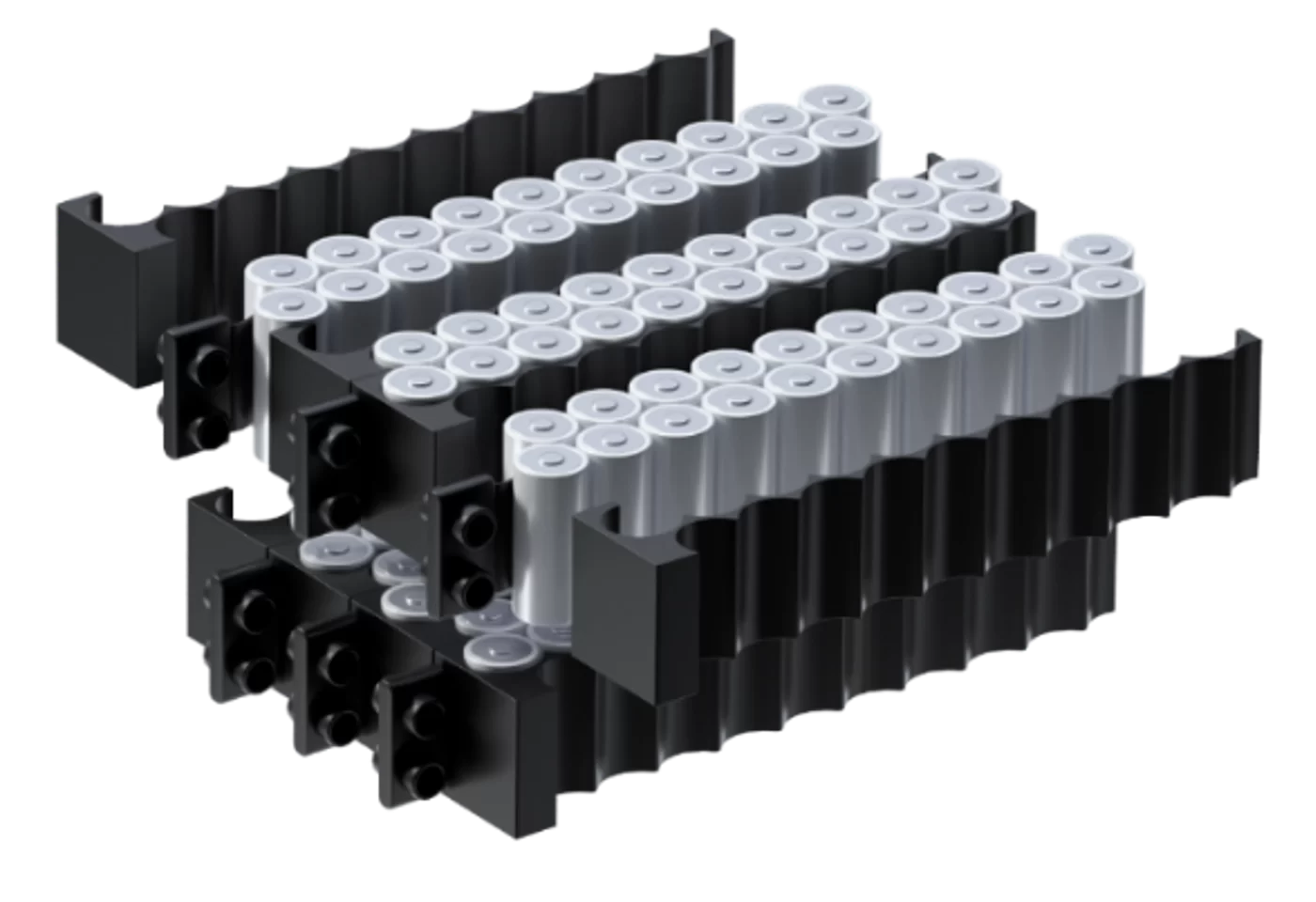
While Directional Venting enhances safety within individual cells, LG Energy Solution’s unique Cell Array Structure (CAS) provides the next layer of protection at the pack level. Developed specifically for 46-Series-based battery packs, CAS provides thermal management, structural load distribution, and cooling across the battery pack.
In addition, CAS integrates cell arrangement, cooling architecture, and structural support into a unified pack design. Its optimized layout enables multiple surface-cooling interfaces to improve heat dissipation and enhance structural rigidity against external impacts and deformation. The design also helps components retain their intended shape during pack assembly and is available in both vertical and horizontal cell layouts.
Why the 46-Series Matters for Future Electrification
LG Energy Solution’s 46-Series is more than a larger cylindrical battery: it is a unified platform that combines advanced materials, cell design, manufacturing, and safety technologies. High-nickel NCMA cathodes and silicon-based anode materials increase energy density, while Tabless architecture reduces electrical resistance and heat generation to improve power delivery. At the system level, Directional Venting and CAS provide complementary layers of protection at the cell and pack levels. This integrated approach provides a flexible and reliable battery platform designed for a range of electrification applications.
FAQ
Q: What is a 46-Series cylindrical battery, and how is it different from a 2170 battery?
A: A 46-Series cylindrical battery is a large-format lithium-ion battery with a standardized 46 mm diameter and multiple cell heights such as 4680, 4695, and 46120. Compared with conventional 2170 cylindrical batteries, 46-Series cells can store more than five times as much energy, reducing the number of cells required per pack and improving packaging efficiency. LG Energy Solution designed 46-Series as a scalable platform that supports applications ranging from electric vehicles to next-generation mobility.
Q: Why are larger cylindrical batteries becoming more important for electric vehicles?
A: As electric vehicles (EVs) require longer driving ranges, faster charging, and higher performance, larger cylindrical batteries can deliver more energy per cell and reduce the total number of cells needed in a battery pack. However, increased cell size also brings engineering challenges arising from higher energy content. LG Energy Solution addresses these challenges through advanced materials, optimized cell architecture, precision manufacturing, and enhanced safety engineering.
Q: What is Tabless battery technology, and what are the benefits?
A: Tabless battery technology shortens internal current paths in a cylindrical battery. This reduces internal electrical resistance, improves power output, and reduces heat during charging and discharging. Enhanced performance, efficiency, and durability make Tabless architecture especially useful for larger cylindrical batteries.
Q: What technologies does LG Energy Solution use in its 46-Series batteries?
A: LG Energy Solution’s 46-Series combines several technologies into a single battery platform. These include:
- High-nickel NCMA cathodes to support higher energy density
- Anodes with advanced silicon material to increase energy storage capacity
- Tabless architecture to reduce internal resistance and improve power capability
- Directional Venting and Cell Array Structure (CAS) technologies to enhance safety at both the cell and pack levels
Together, these technologies are designed to deliver high performance, manufacturing efficiency, and scalability across electric vehicles and other electrification applications.
+ To stay up to date with the latest news from LG Energy Solution, click “Subscribe.”